I was worried I didn’t have much new to say about DC’s comics from March 1984, but then I got going, and yeah, I had some thoughts. (Check out the Intro to this series if you want to know why I’m doing this or to check out the other posts.)
PLOT PERILS: I haven’t done an official count, but if you asked me who has written the largest number of my favorite comics, Mark Waid is at minimum a strong contender for the number one slot. In a recent episode of the Off Panel podcast hosted by David Harper, Waid said that he had to unlearn lessons he had learned while working for longtime DC editor Julius Schwarz, who prioritized a story’s plot to the point where “you could swap the balloon tails with any two characters and it wouldn’t matter.”
Schwarz was still editing the Superman titles in 1984, and boy, do I understand what Waid was talking about now, and I’m glad Waid made that switch. February’s issue of ACTION and March’s issue of SUPERGIRL are a two-part celebration of the anniversary of Supergirl’s first appearance. The entire story rests on a parallel structure in which Superman and Supergirl each face off against a foe in their respective cities, and each gets trapped in an allegedly-inescapable container. They each use a Kryptonian item that helps them maintain their secret identities as a way of getting out of the chamber and thwarting the super villain. The story exists to get the hero into a predicament and then, at the end, the hero uses a clever trick to escape the predicament. It lacks drama, it lacks stakes for the characters, it lacks personality.
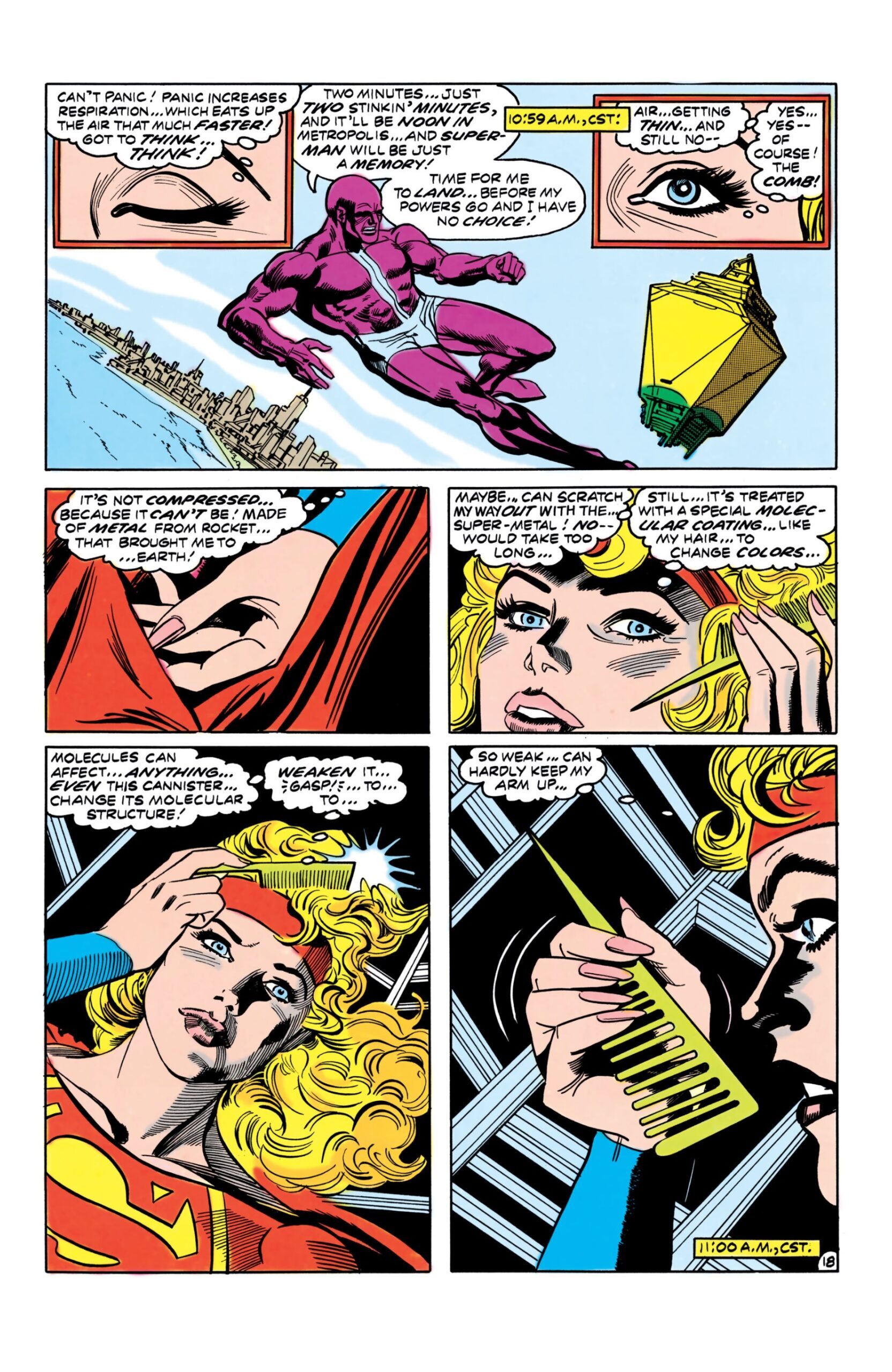
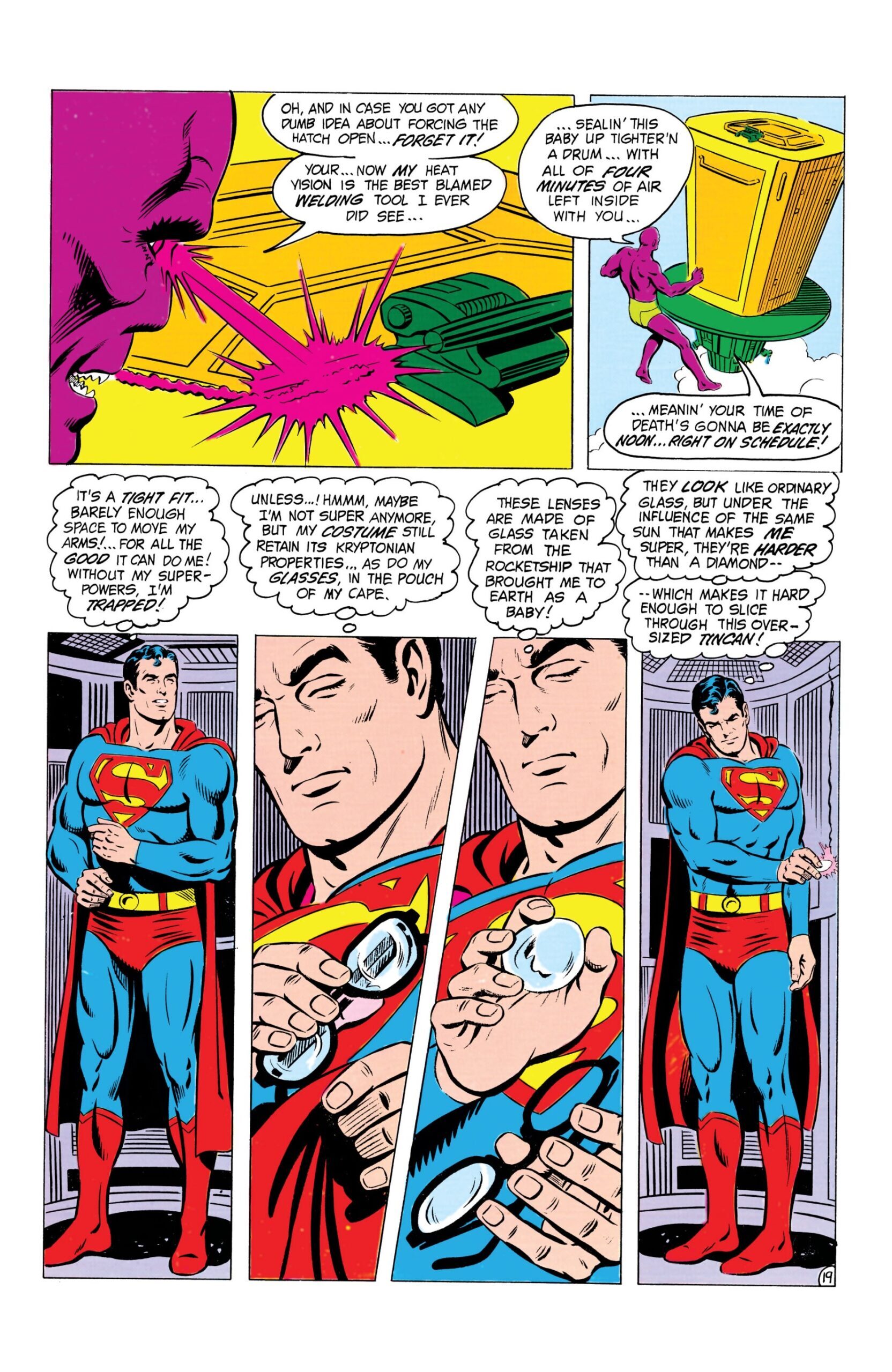
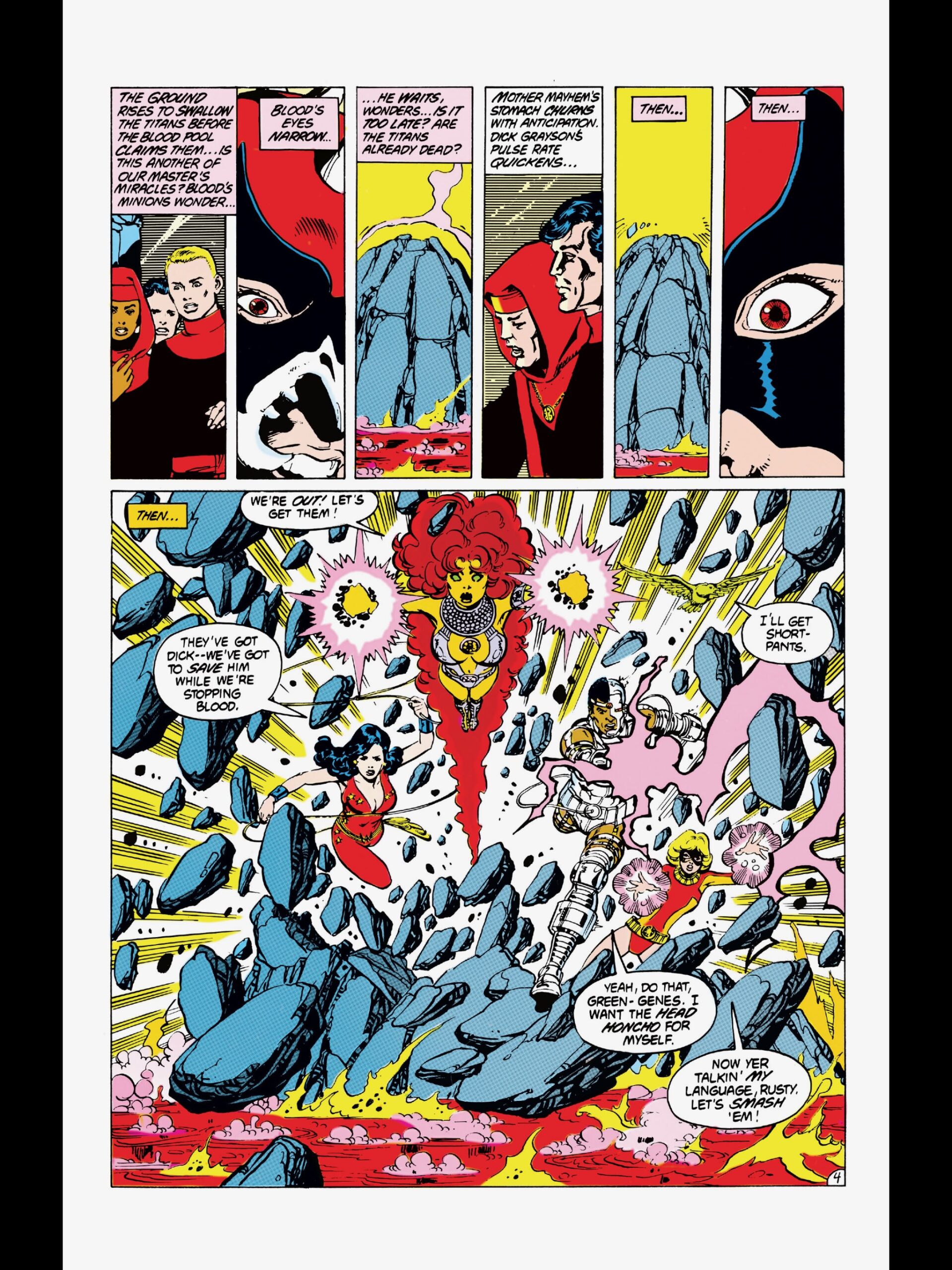
And there is no way I am going to lay this at the feet of the writers. Paul Kupperberg was writing very different stories over on ARION, LORD OF ATLANTIS at exactly the same time. Marv Wolfman was writing his script for March’s issue of ACTION while he was writing The Judas Contract over on THE NEW TEEN TITANS. I have to conclude these Superman books are the way they are because that’s the kind of book Schwartz wanted. And that’s too bad. In 1984, I think Superman could have been a more interesting character with a different editor.
(Brief aside/disclaimer: In one sense it seems beside the point to talk about the work that Schwarz did, because based on what I think are credible reports that he was a sexual harasser, he shouldn’t have been doing it in the first place. But the work exists, and his influence is significant, so I will discuss the work. But even if these books were works of genius, that wouldn’t excuse the lack of respect Schwarz is said to have showed for artists and people.)
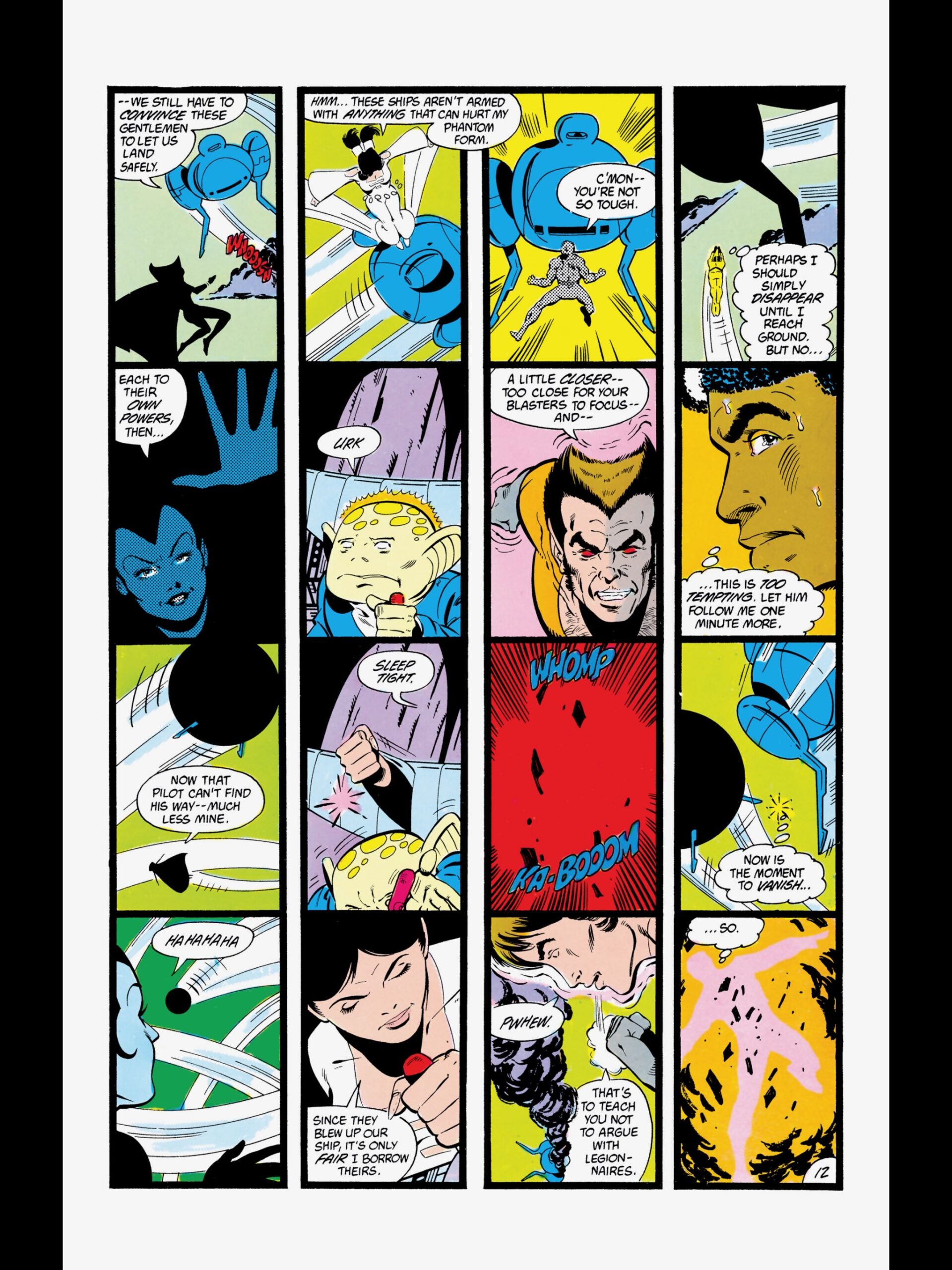
NOT QUITE SUPER IN LOVE: One type of character development that the Superman books did feature in 1984 was the romantic subplot. Kara in SUPERGIRL is having some issues with a musician she’s seeing, but at another point in her personal timeline, Superboy notices that she’s spending a lot of time in the 30th Century . . . which flusters Brainiac 5.
Meanwhile, over in ACTION COMICS 556, Lois Lane has taken herself out of the romantic picture and Clark Kent’s thoughts seem to be turning more to Lana Lang, who is also a reporter in Metropolis at this point. To me, this is an interesting path not taken. Most of the time I have seen Lana Lang interact with an adult Clark Kent, she’s representing the life and the world that he left behind in Smallville. To have her join Clark in Metropolis, and be someone who shared more of his life’s journey with him, is an interesting angle to their relationship, even if it risks making Lana too much like Lois Marv Wolfman implies that Lana isn’t the sort to jump off of tall things in order to get Superman’s attention – Clark thinks she’s more careful than Lois. This might be an attempt to avoid making the two characters redundant. I’m curious to see if the writers develop this angle over subsequent issues.
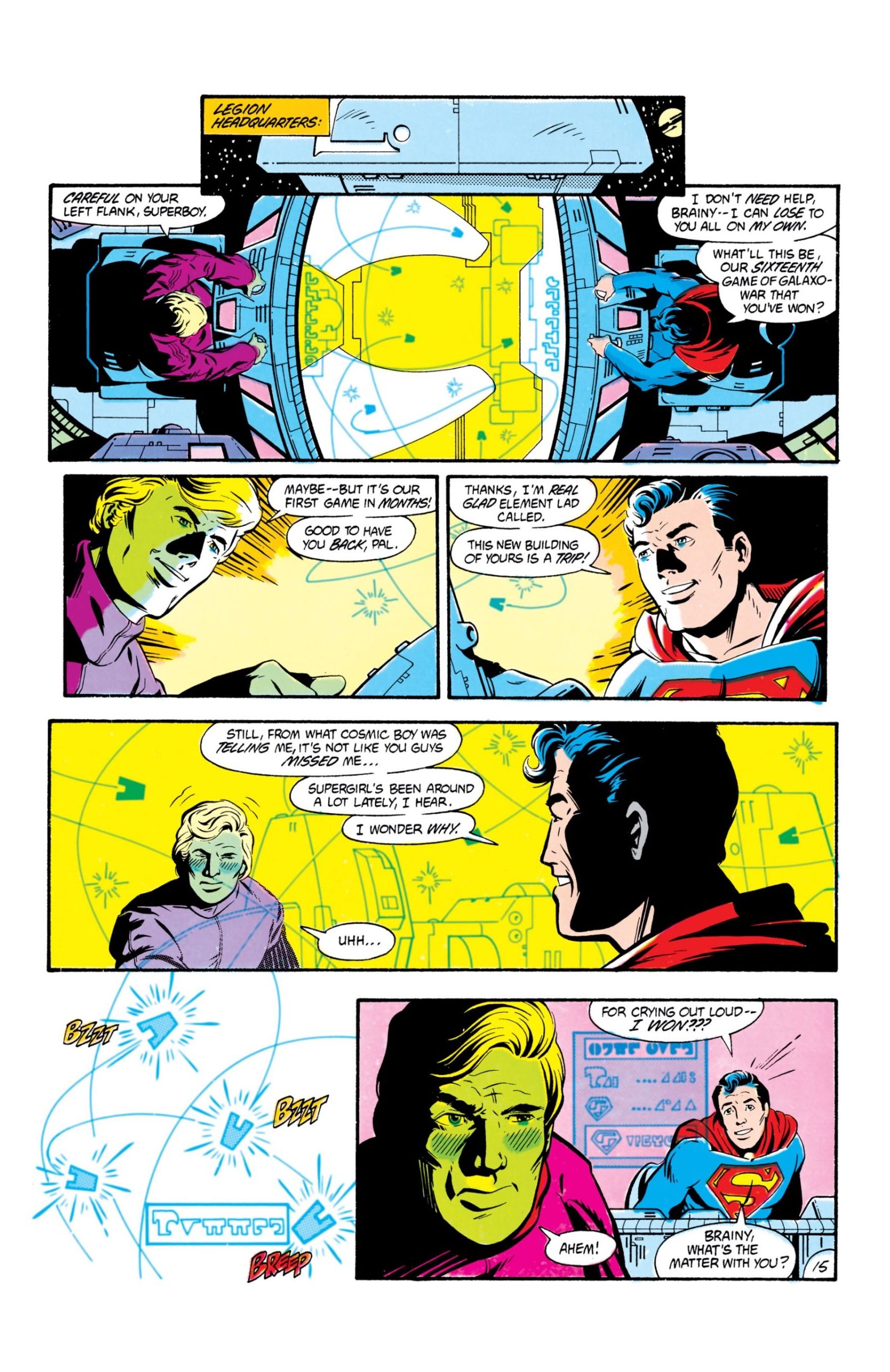
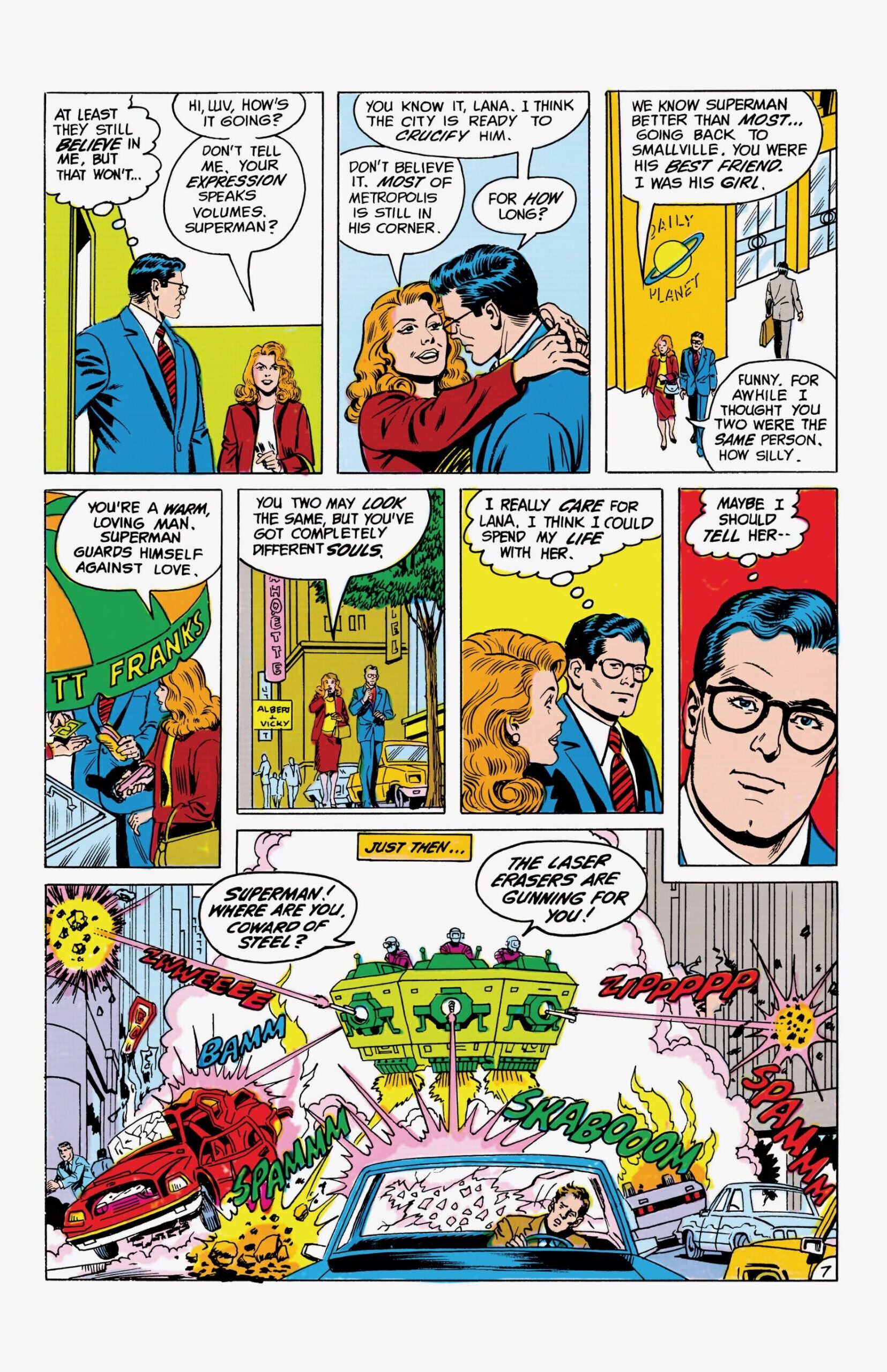
As I thought more about these two scenes, it struck me that even though writers had spent the 1970s and 1980s aging the once-teenaged heroes of the Legion, Superboy was still the character traveling from the 20th Century to hang out with them, not Superman. I understand the Superman was often a member of the Justice League and teaming up with Batman in WORLD’S FINEST, so it may have been awkward to also have him team up with the Legion. (I know there are a handful of “Adult Legion” stories – I’m not counting those since they were not quite regular adventures of the team.) CRISIS ON INFINITE EARTHS and subsequent reboots wound up making this a moot point, but I wonder at what point it would be off-putting to have a teenage Superboy teaming with a bunch of adults, some of them with families of their own. Would it be a good idea to have Superman be an occasional member of the team, working with friends he grew up with on the super-hero side of his life along with the journalism side? I think so. On the other hand, I’m at an age where I reflect on growing older a lot more than the intended audience of these comics probably did!
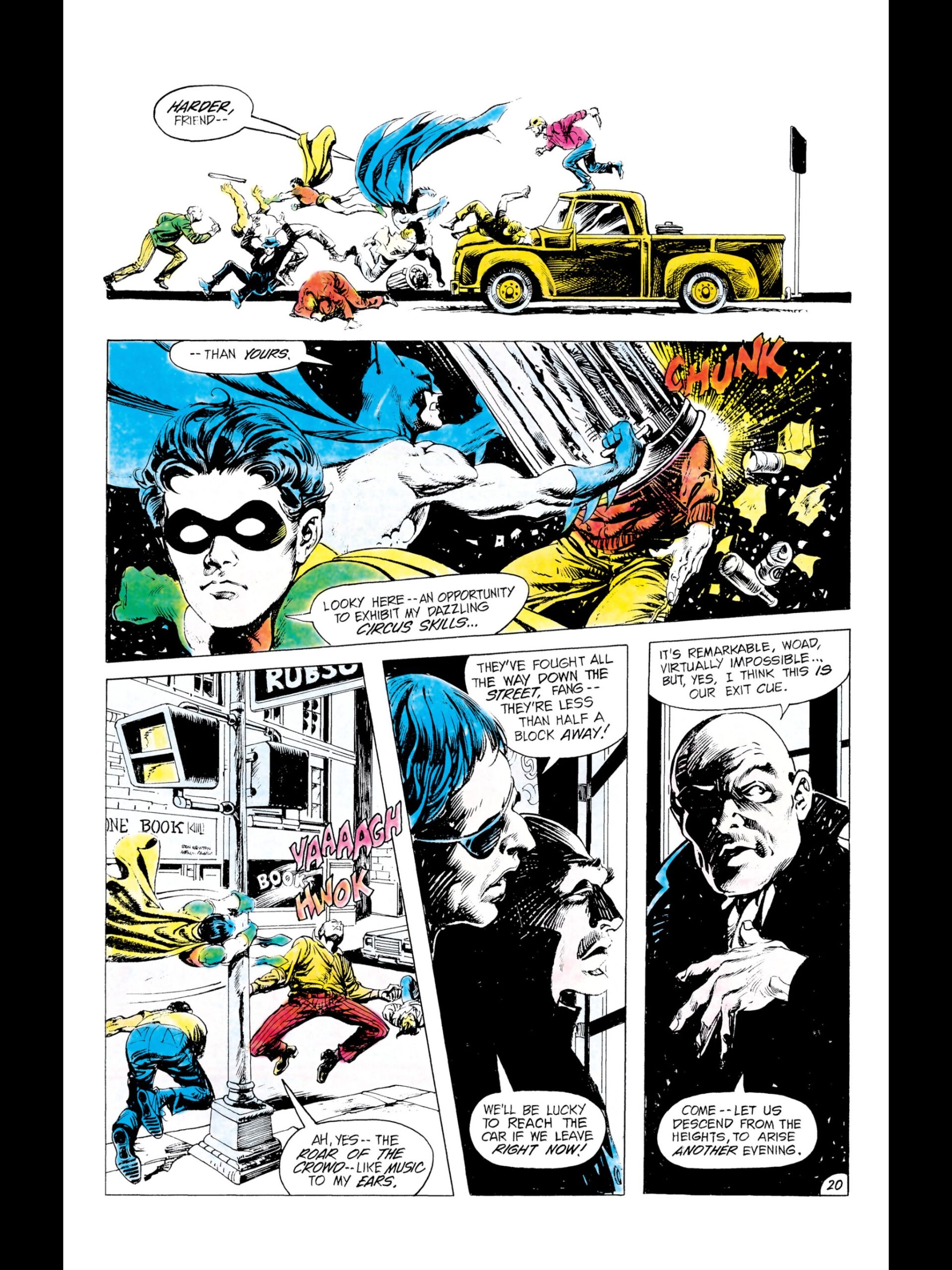
RACE AND THE RING: Doug Moench continues his monthly two-parters in BATMAN and DETECTIVE; this month, the crime lord Dr. Fang decides to manipulate the boxing world to schedule a fight that he will be able to manipulate for ill-gotten gambling gains. It was interesting to think about how in the early 1980s, boxing had a place in the public consciousness that made it a ripe metaphor for society’s racial conflict. Moench puts an underdog fighter being used as a pawn in Fang’s plan in the spotlight, and it’s an interesting character study.
I was frankly surprised to see how Moench doesn’t really hold anything back in this story – the racial tension is directly commented on, and Moench makes clear that the racists are terrible people. I was surprised to see a comic sold in 1984 use the N-word directly in the dialogue – even if the lowlife who uses it is immediately punched and deposited in a trash can. I asked about this on Bluesky and several people pointed out that it was not uncommon for racist language to appear in dialogue, in the name of criticizing racism. Even though I was alive in the mid 1980s, I was just a kid, so it’s eye-opening sometimes to read these comics and see a different reflection of the world.
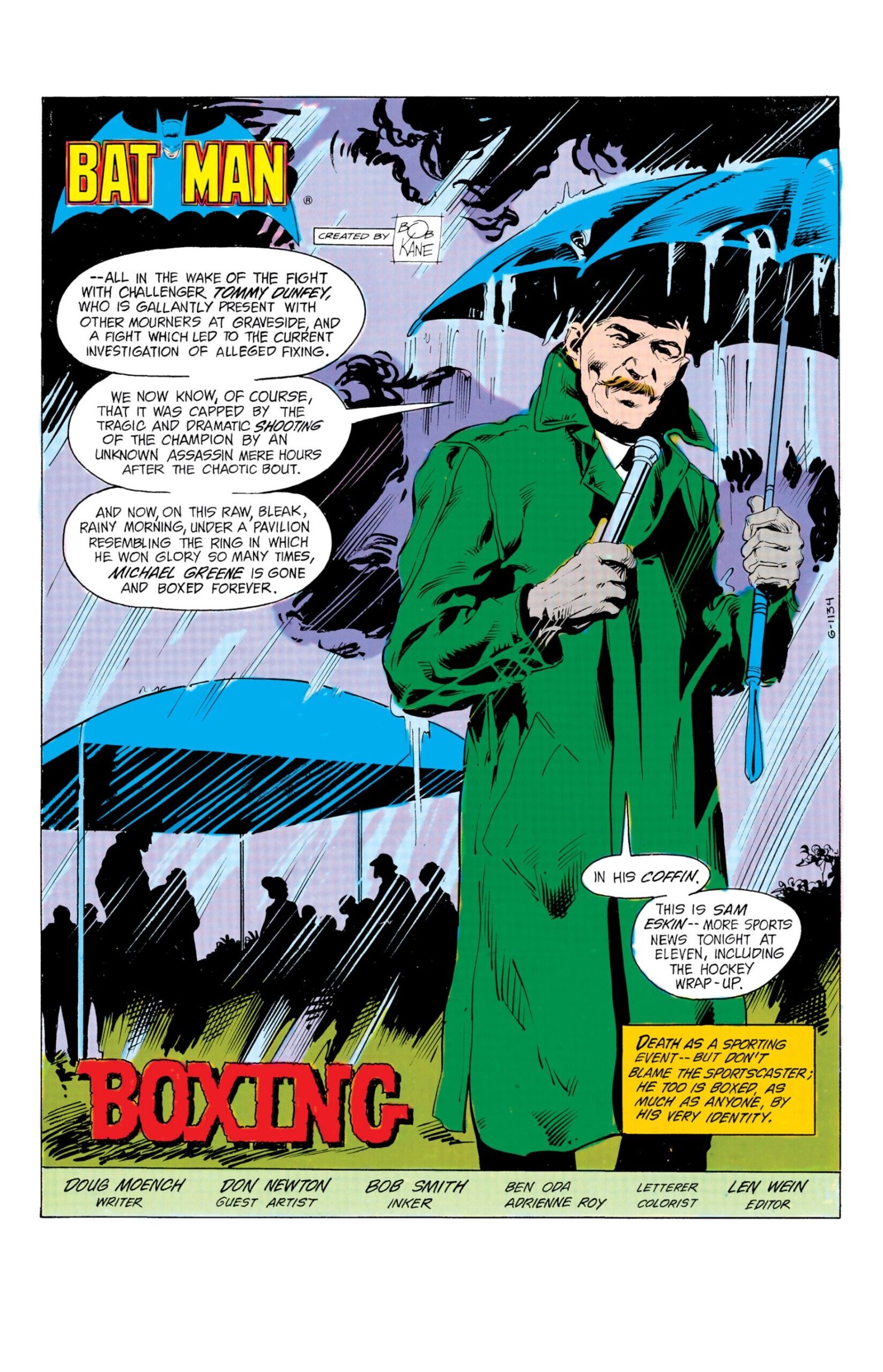
DEVIL OF A DEBUT: Of the regular writers I am encountering in this 1984 read, the one I was least familiar with is Dan Mishkin, the regular writer of WONDER WOMAN who is also a co-creator of Blue Devil, whose title premiered this month. As it turns out, a few days after I read BLUE DEVIL 1, I saw that Mishkin is active on Bluesky, and artist Matthew Dow Smith had just done a drawing of the character as part of a set of weekend commissions. (I’ve been amazed at how many times I have seen something in 2026 that makes me think of a comic from 42 years ago that I have recently read.)
Hey, remember when I said I got to draw my favorite comic book character for one of the people who created him?
????????????????????
— Matthew Dow Smith (@matthewdowsmith.bsky.social) August 19, 2026 at 9:45 AM
This new title and character get off to a decent start, with a cast of characters and their somewhat complicated personal relationships established quickly. I realize that a 50-year-old in 2026 was not the target audience for this comic book in 1984, but when I look at the number of romantic longing subplots that had to do the heavy lifting of character work in these comics, I want to follow a bunch of these characters around with a boom box blaring Billy Joel’s 1983 hit Tell Her About It.
Paris Cullins does a nice job with the character and the action scenes, leading up the final page reveal of the central premise or hook of the character. I’m looking forward to seeing how it develops in future issues.
GIL TO THE GREEN: It looks like there was a glitch in the schedule and the story that DC intended to publish in GREEN LANTERN 177 wasn’t ready in time. So we get what is essentially a fill in story with a framing sequence drawn by Chuck Patton. Hal returns from last issue’s fight and gives an interview to a TV reporter, which gets him to thinking about a previous time he got into a tough fight. The flashback sequence, in turn, is drawn by Dave Cockrum. It’s a perfectly adequate story and the artwork is quite good, but the truth is that a week after I read it, I remembered the basic structure but had forgotten many of the details. This is another one of those moments that shows how 80s superhero comics were a lot like TV procedural dramas . . . the publishers needed to have a new adventure ready to roll out every month, and not all of them are going to be memorable.
These days I feel like publishers are more likely to just delay a book rather than interrupt a serialized story. When health issues slowed Jim Lee down and delayed the issues of BATMAN he was working on, DC just went months at a time without publishing BATMAN, until the renumbered BATMAN series was ready to launch. (This means DC published BATMAN 161, BATMAN 1, BATMAN 2, BATMAN 3, BATMAN 162, BATMAN 4, BATMAN 5, BATMAN 6, BATMAN 7, BATMAN 8, BATMAN 9, and BATMAN 163, in that order. Have I mentioned how cranky contemporary comics numbering makes me?)
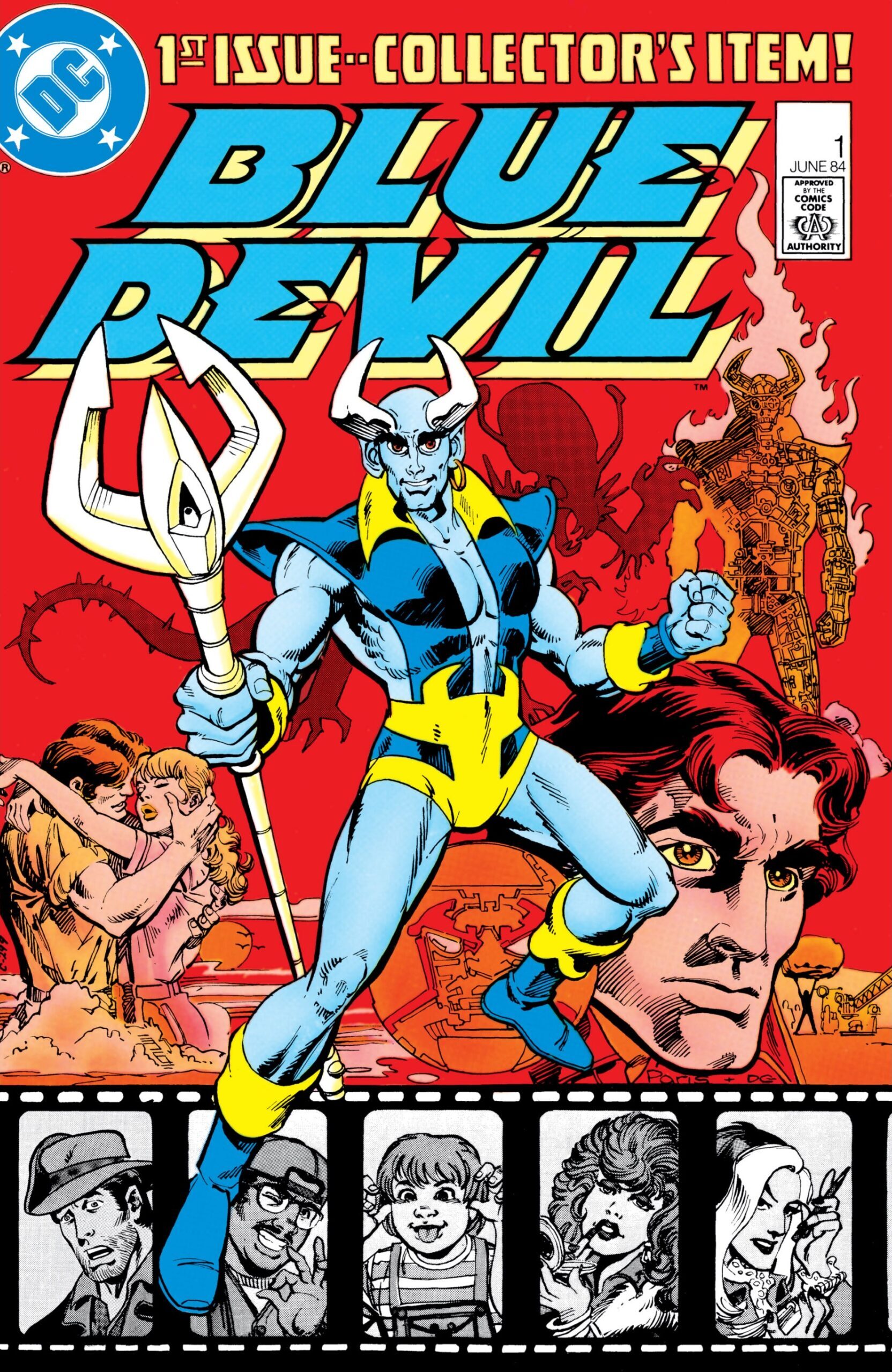
There’s also a backup Tales of the Green Lantern Corps feature, which I appreciate as a way of showing one of the 3599 Green Lanterns who aren’t supposed to be protecting Earth. This Tale in particular is cool because it has art by legendary Green Lantern artist Gil Kane, and it shows a GL on his last day on the job before he retires to hand the ring over to someone else.
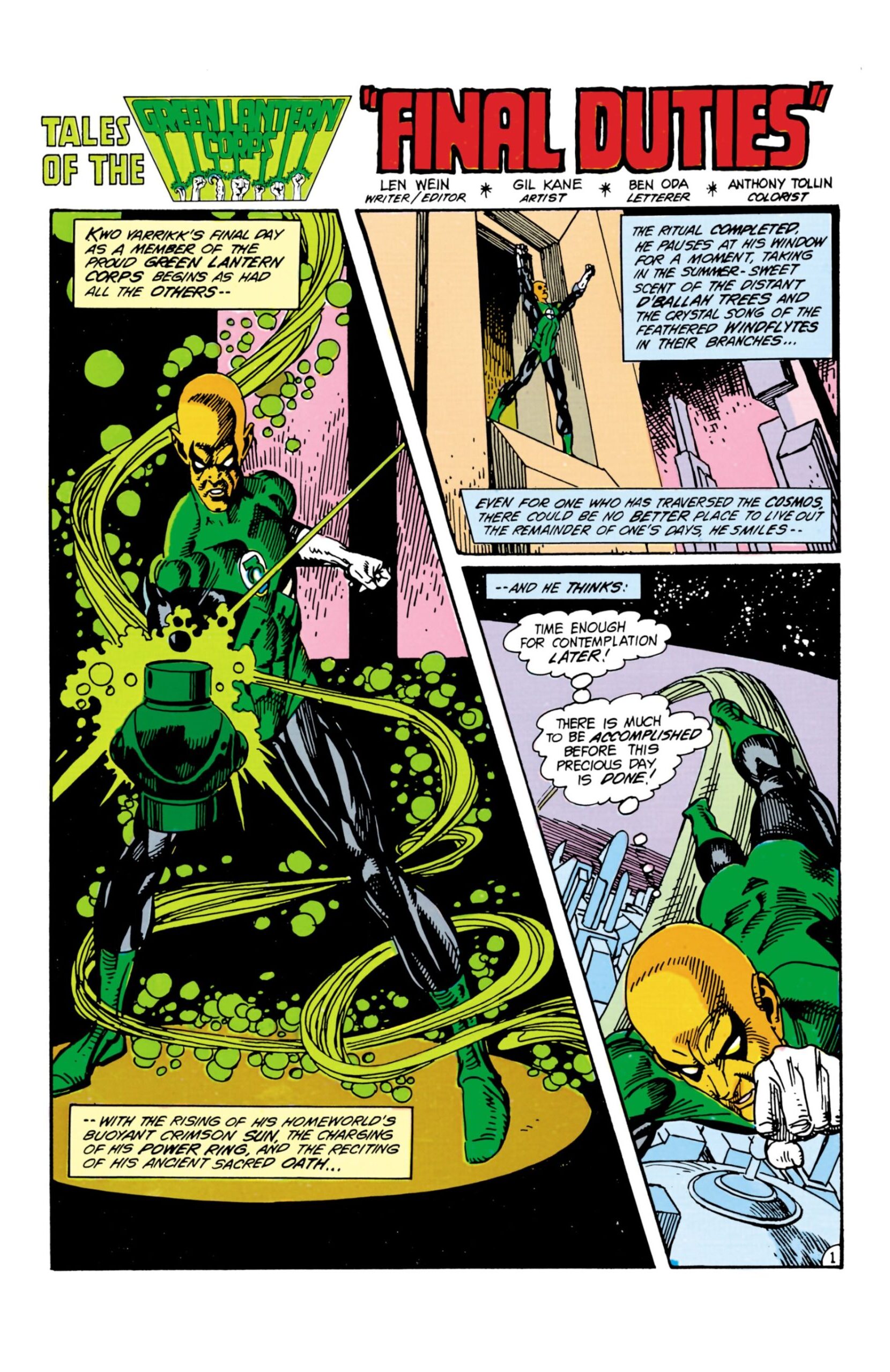
I will probably have more to say about this when covering a later month, but it is interesting to see how DC was depicting Hal and the Corps back in 1984 and compare it to what we’re seeing on TV with LANTERNS – a show I’m really enjoying, but is definitely setting its own direction.
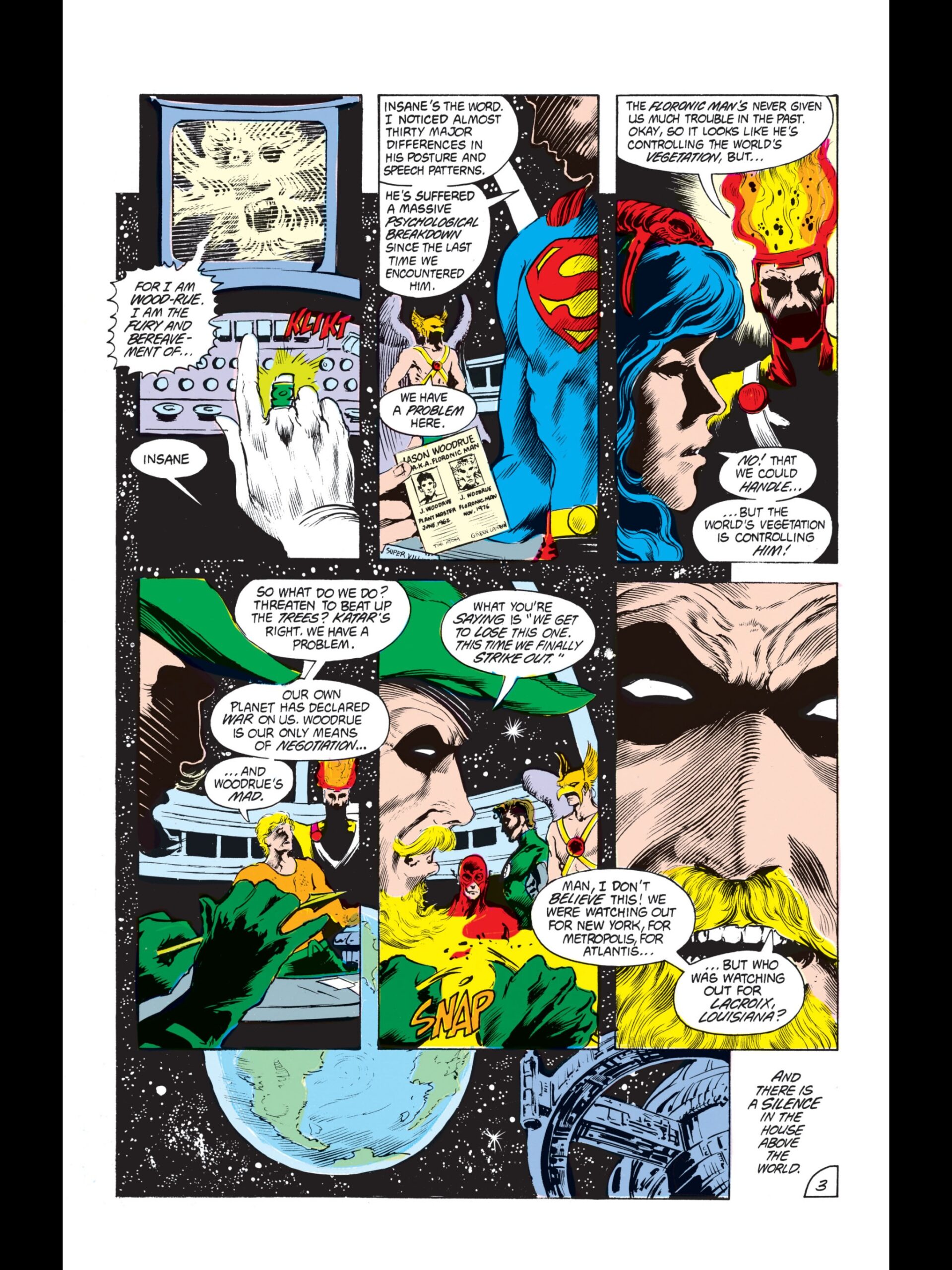
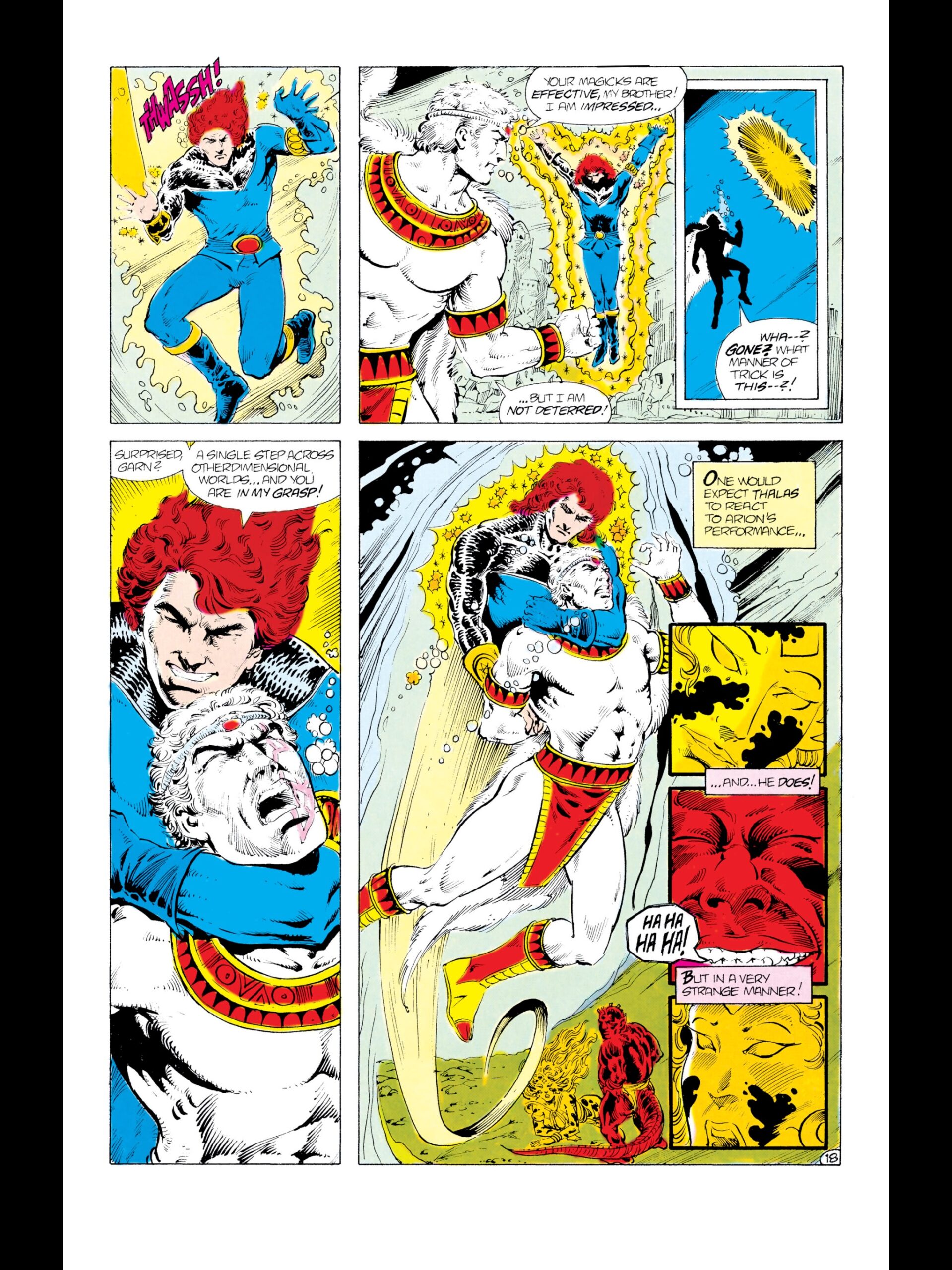
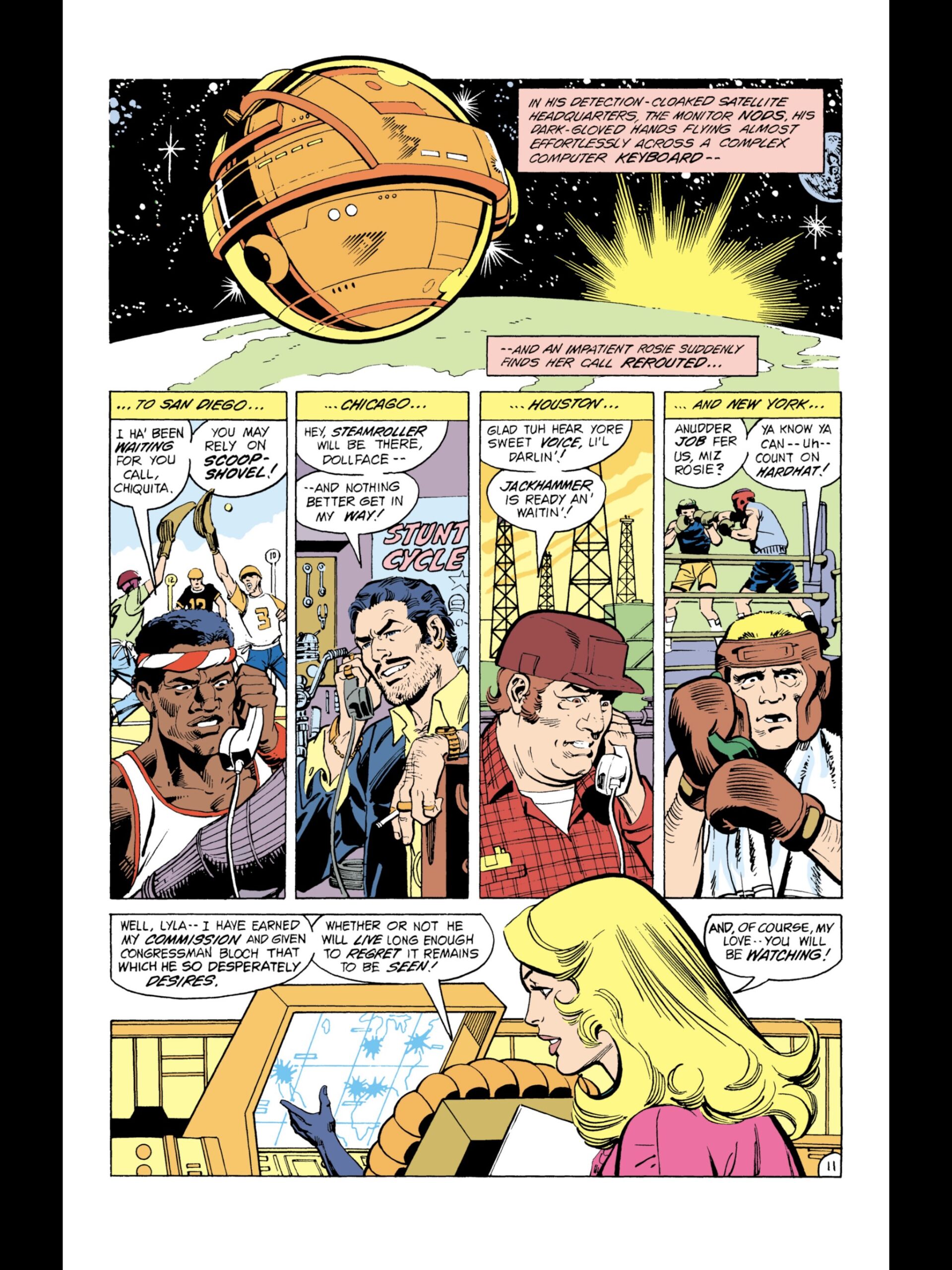
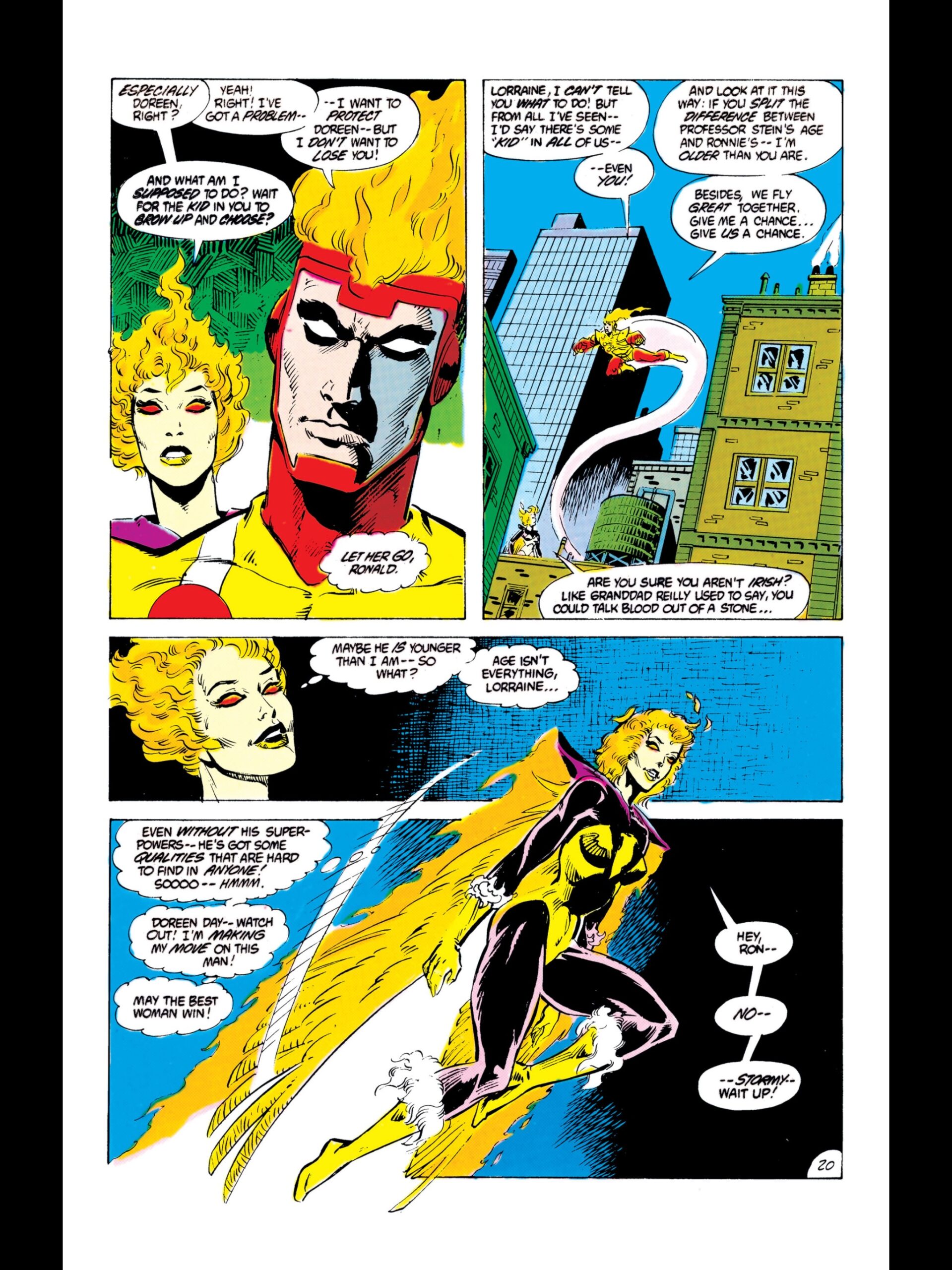
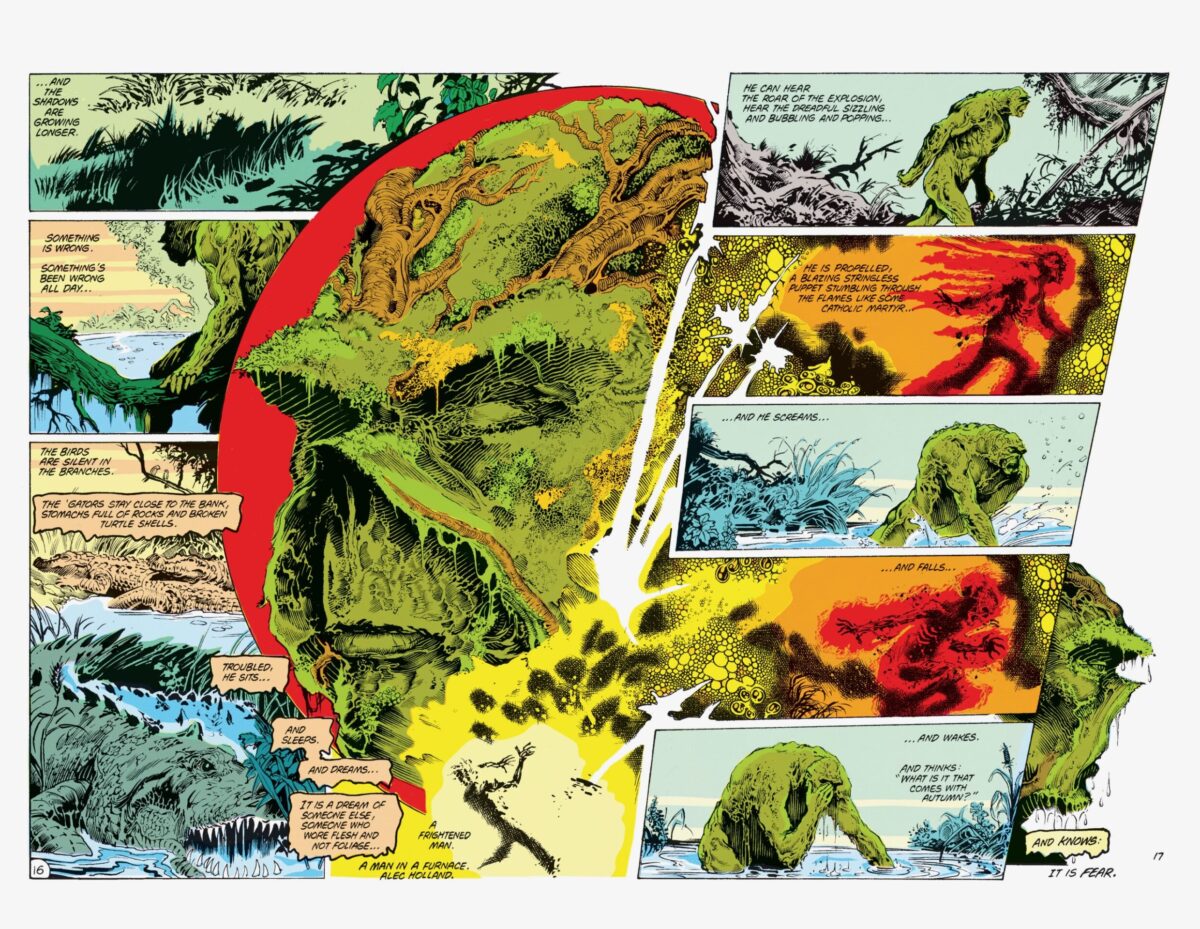
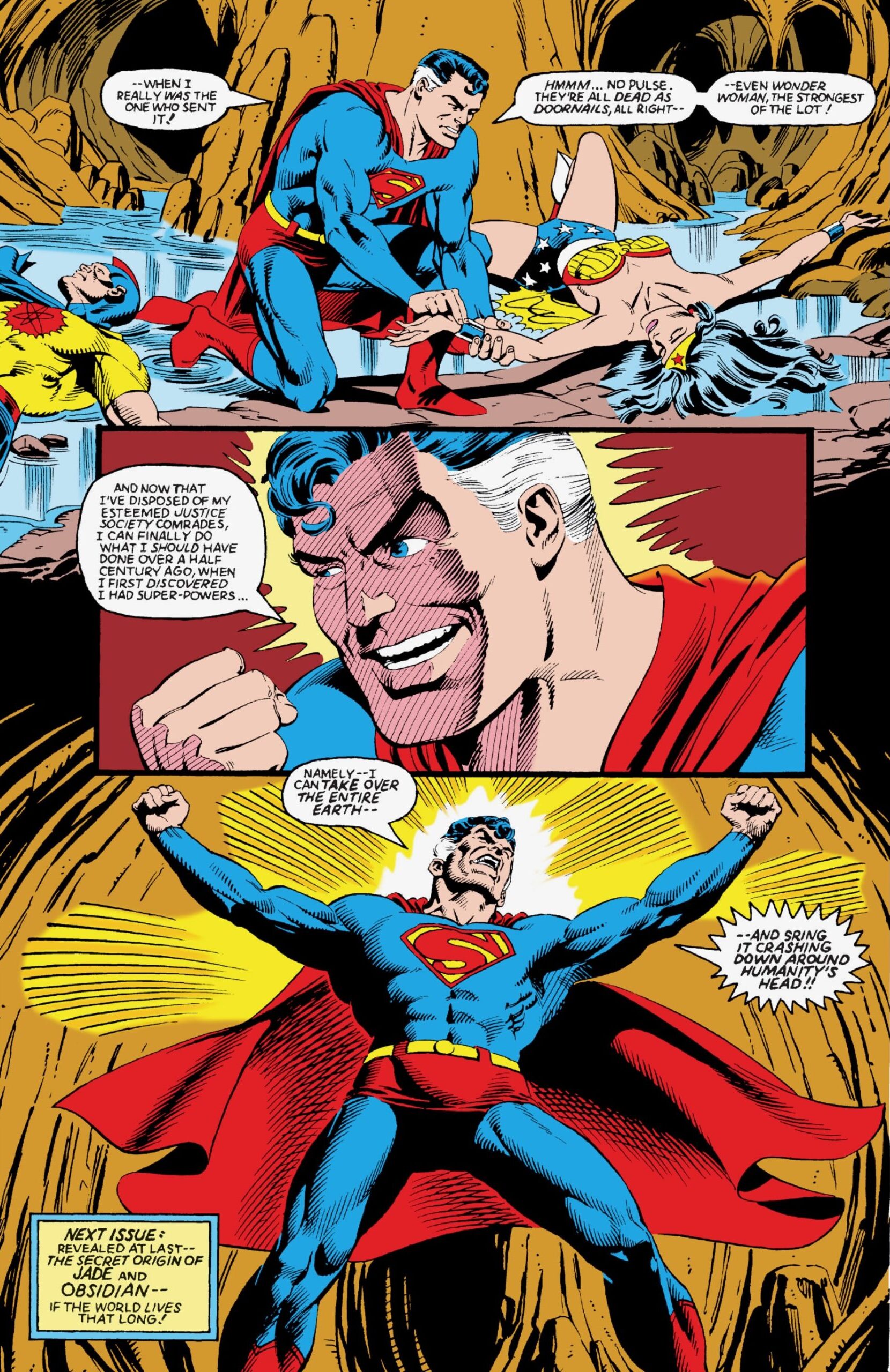
COMICS ART IS JUST COOL: There are a couple of books this month where I don’t have much to say about the stories but some of the art was just so cool that I snapped the screenshot buttons on my iPad.
Here’s Jerry Ordway drawing the original Superman from Earth-2, albeit a little older and driven homicidally insane on a temporary basis, in INFINITY INC. 3.
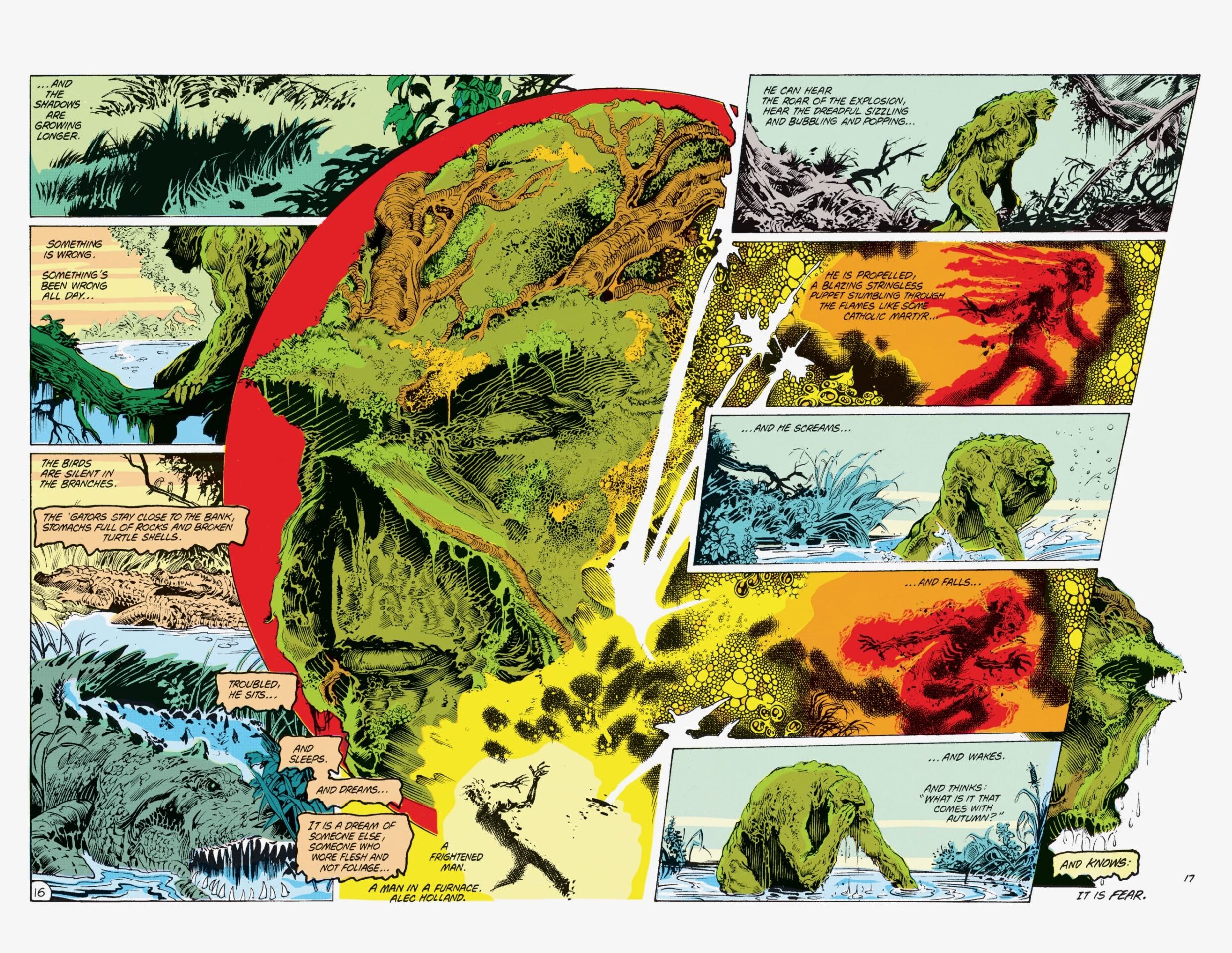
And geez, just look at what Steve Bissette, John Totleben, Tatjana Wood, and John Costanza did on this two page spread from SAGA OF THE SWAMP THING 25.
Comics are great. I’m gonna go read some more. Catch you soon with thoughts about April 1984.