Let’s talk about DC Comics published in January 1984, cover date April 1984. I’m not going to do issue by issue roundups here (unless I get feedback that people would want to read such a thing), but rather I’ll try to comment on general themes and observations. (See the Intro post if you want to know why I’m doing this series.)
WHAT WAS MISSING: This is not a criticism of the DCU Infinite app – it’s a tremendous value that gives you access to a huge and growing library at a price so low I sometimes feel guilty. But there are gaps in what it includes, either because DC hasn’t created digital files or because they just haven’t seen fit to include it, I wasn’t surprised that titles like ATARI FORCE and STAR TREK weren’t there, but I was surprised that the April 1984 issues of SUPERMAN, NEW ADVENTURES OF SUPERBOY and THE FLASH were not. (I couldn’t find any issues of the following titles: BLACKHAWK, GI COMBAT, SGT ROCK, NEW TALENT SHOWCASE, or ARAK, SON OF THUNDER; THE WARLORD #180 was also missing.)
SO MANY WORDS: I don’t know if I have the patience or time to do a more systematic study of this, but between thought balloons, third-person omniscient narrator captions, and expository dialogue, most of these comics just flat out had more words in them than the issues I’m reading from the 2020s. Granted, Roy Thomas in ALL-STAR SQUADRON #32 does a lot to up the total, but even the average issue does a lot more telling of the story. Len Wein uses the narrator captions in GREEN LANTERN #175 to establish a newspaper as a framing/transition device, for example. You don’t really see the writer address the audience directly like that these days.
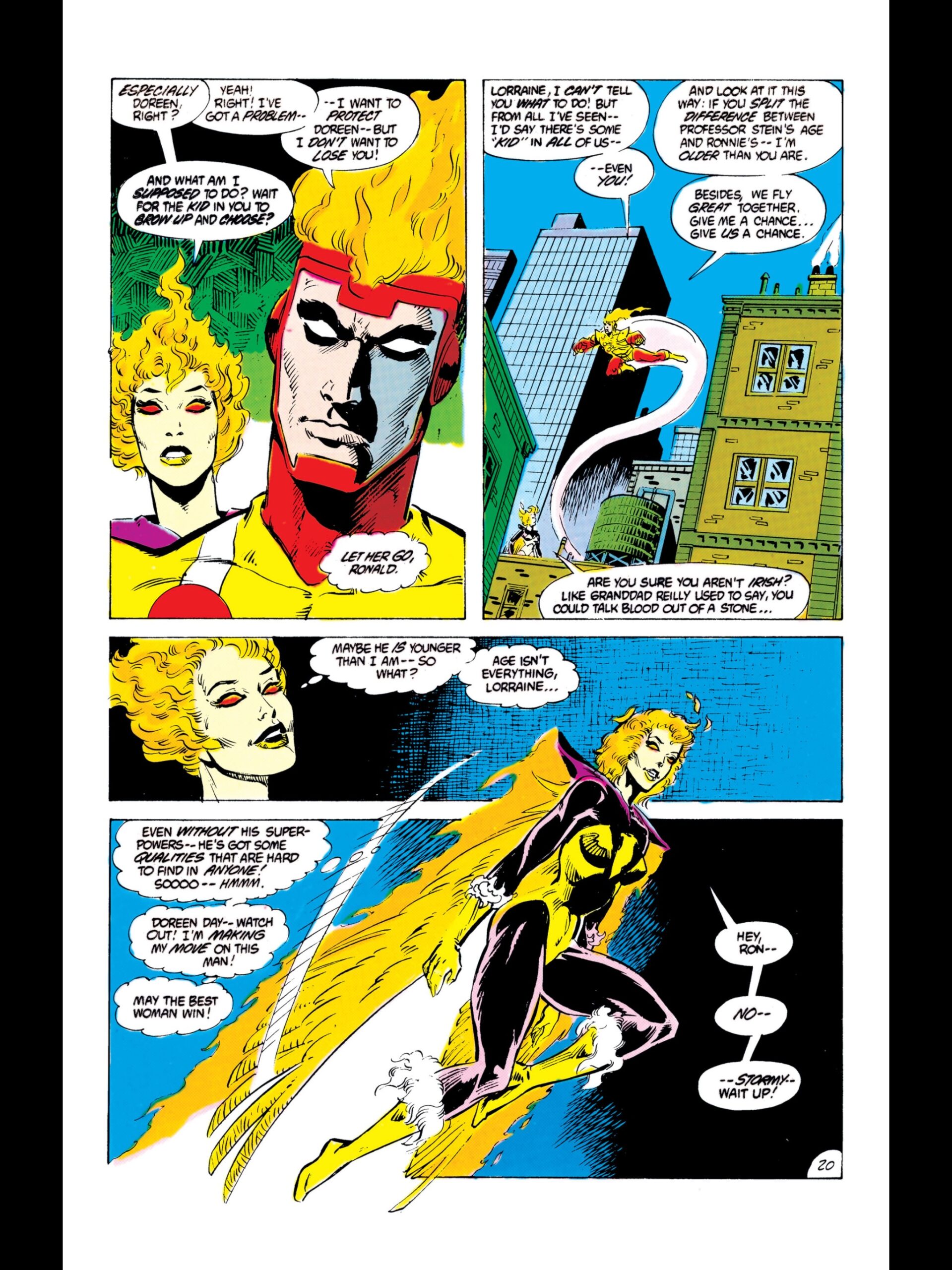
SHORTER STORIES: A lot of these books had stories that wrapped up in one or two issues, like they were episodes of a procedural drama rather than an ongoing serialized storyline. SUPERGIRL #18 has an antagonist that Supergirl dispatches by the end of the issue and is never seen again, and I’d say at least a quarter of the book is given over to a relationship subplot that’s already in progress. FURY OF FIRESTORM #22 works a one-issue recap of Firestorm’s origin into a rooftop conversation.
For comparison’s sake, I took a look at two modern books I have been meaning to catch up on – Tom Taylor and Mikel Janin’s first story in DETECTIVE COMICS was seven issues long, and the next issue of Mark Waid, Dan Mora and Tamra Bonvillain’s BATMAN/SUPERMAN: WORLD’S FINEST kicked off a four-issue arc. With that many issues to tell a story, you can use fewer panels, and you can spend time on each step of the back and forth between protagonist and antagonist. At the same time, a reader needs to invest months into watching Batman solve a single case.
Now, in January 1984, Paul Levitz and Keith Giffen were finishing up the four-issue “Omen and Prophet” arc in LEGION OF SUPER-HEROES, and Marv Wolfman and George Pérez were about to start the four-part “Judas Contract” in TALES OF THE TEEN TITANS. And there are probably done-in-one stories today that I miss because I am not reading every book that comes out in a given month. But I definitely feel like the base unit these days is more often “an arc” than “an issue,” and I get the opposite vibe from 1984.
BROADER STROKES: I think because many of the stories were shorter, writers felt the need to push emotional beats to develop and resolve quickly, with characters making intense, dramatic statements and then dispensing with resultant conflicts very quickly. I noticed this most prominently in issues of JUSTICE LEAGUE OF AMERICA and FURY OF FIRESTORM written by Gerry Conway. That rooftop conversation in FURY OF FIRESTORM either advances or resolves a love triangle – I’ll find out in subsequent issues.
BAXTER BEGINS: I read two issues printed in DC’s Baxter format, which used better paper in order to show more detail and allow for better color reproduction than newsprint. (Shout out to colorists, by the way, and I’m gonna have more to say about that in future roundups.) These books were sold exclusively to comic shops in the direct market and did not bear the seal of the Comics Code Authority, so among other things, they were able to have a different and more mature tone than the rest of the line.
OMEGA MEN is a series I had read before, and reading issue 13 again here reminded me of how surprised I was by how bleak that series was in the way it showed violence and oppression, and how lonely the struggle against it can be.
Meanwhile, VIGILANTE brings the 70s/80s attitude that the system is broken and can’t keep people safe to superhero comics, as a former district attorney takes it upon himself to take out the bad guys. On the one hand, this feels like a weird theme for superhero comics, since most of the characters already are people who take the law into their own hands. But even in 1984, writers were grappling with this – just in this month’s issues, the Legion has friction with the Science Police and the United Plantes government, and Supergirl talks about how the United Nations has authorized her to enforce the law and protect the people. So I guess there’s a place for a book like VIGILANTE, where the characters don’t even want the approval of the system.
BATMAN IS IN GOOD SHAPE: Doug Moench was writing both BATMAN and DETECTIVE, and his skill plus the general approach to characterizing Batman before Frank Miller changed the game with YEAR ONE and THE DARK KNIGHT RETURNS really works for me. Don Newton and Gene Colan do a great job with the pencils of these issues, and I was fascinated by the coloring on BATMAN #370. It reminds me of watercolor paints, and there’s so much white space. It’s so unlike these other issues that I would love to compare the DC Universe Infinite version to the original printed issue to see if they look alike. Whatever the case may be, I liked the effect.
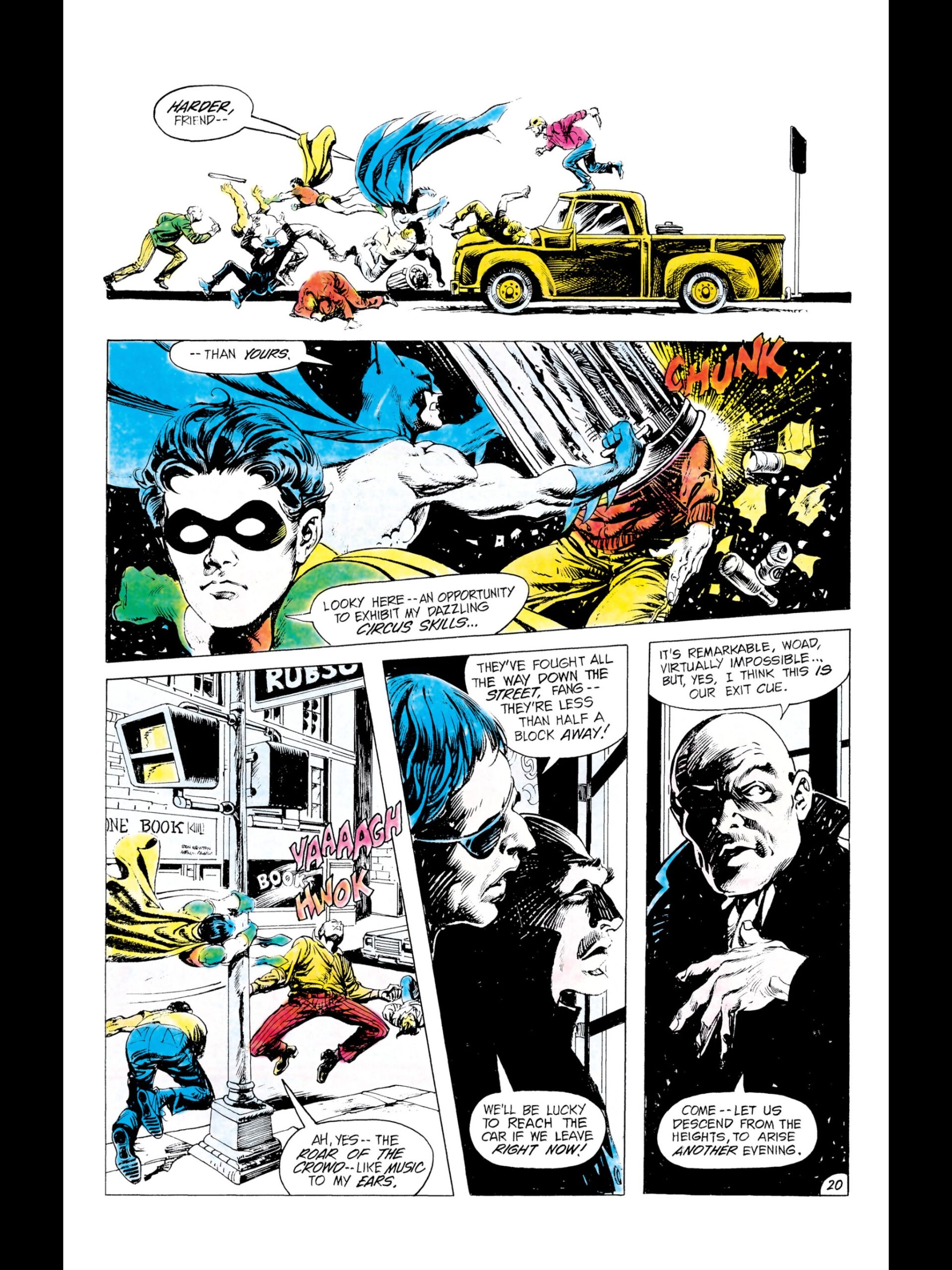
We see the first, pre-CRISIS version of Jason Todd stepping into action as Robin (having received the blessing of Dick Grayson in an earlier issue that I snuck into this reading pile). Bruce has a level of humanity and emotional maturity that he too often lacked in the 90s. Gotham feels like a city that has its challenges but isn’t hell on Earth. He’s leading a team in BATMAN AND THE OUTSIDERS and he even gets to reconcile with Superman in a backup story in WORLD’S FINEST #302. There’s a reason I usually use the Bronze Age Batman costume when I’m playing LEGO BATMAN: LEGACY OF THE DARK KNIGHT. I like this interpretation of the character a lot.
SUPERMAN NOT SO MUCH: It’s hard to feel as optimistic about Superman at this point. Granted, there were two Superman-related books I couldn’t read because they aren’t in the DCU Infinite library, but that’s a point of concern in itself – it would seem there hasn’t been enough demand to reprint or digitize these stories. And the stories I did read in DC COMICS PRESENTS #68 and ACTION COMICS #554 didn’t really get me excited about the character. Now, DC COMICS PRESENTS is a team up title, so maybe Gerry Conway was more focused on exploring Vixen than Superman. And ACTION COMICS this month was a fairly simplistic tale from Marv Wolfman paying homage to Jerry Siegel and Joe Shuster and the concept of Superman more than the character. So maybe I’ll have a better impression in subsequent months.
WINNERS AND STILL CHAMPIONS: The two series from this era that are huge chunks of my back issue collection are TALES OF THE TEEN TITANS and LEGION OF SUPER-HEROES. They were some of my first glimpses of pre-CRISIS DC and their reputation is well-deserved.
Paul Levitz on the Legion is a master of juggling the huge cast and all of their relationships and subplots while creating knock-down drag-out super-battles. He made the 30th Century a rich setting with political and cultural conflicts that the Legion needed to navigate. Keith Giffen is a hugely talented writer himself, and during this era his pencils still have a more traditional look that I prefer to his later, more stylized work.
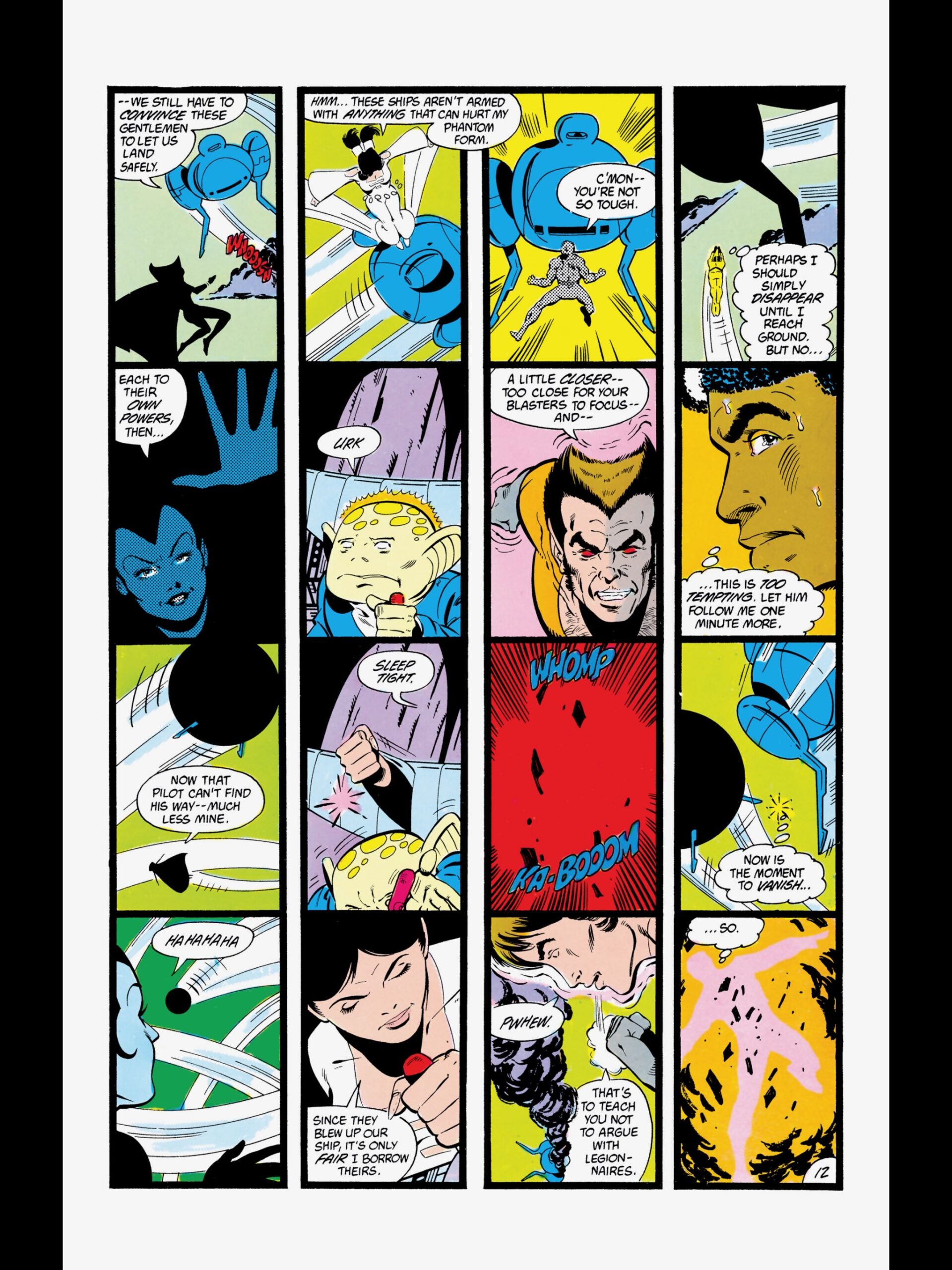
And boy, did the storytelling in the Legion need to be dense to carry all of that material. Never mind the nine-panel grid – look at Giffen saying F it, we’re doing sixteen panels. (This page is actually from the first part of the Omen and Prophet Arc – I did go back to read the whole thing rather than jump in on part 4.)
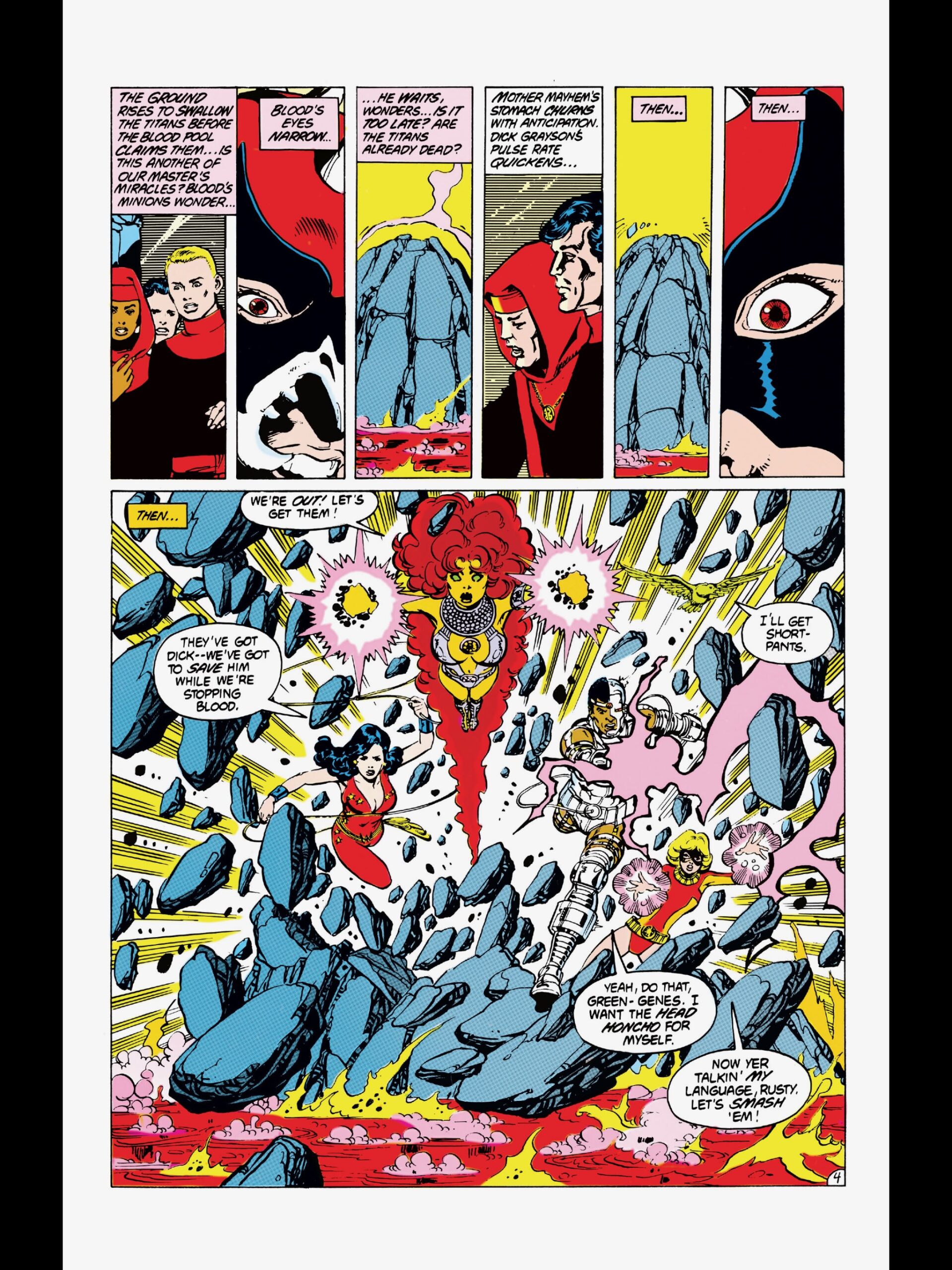
Of course, if you’re going to talk about detail in comics storytelling, the master George Pérez was at work in TALES OF THE TEEN TITANS. I think his 1980s work is my favorite of his long career – he was certainly excellent from the 1990s through the 2010s, but the 80s was the perfect mix of detail and an open, graceful quality for me. This issue has several short battle scenes leading to a conclusion where the power of love and friendship (and energy bolts) saves the day. And boy, does Pérez sell every bit of it. Before I finish this review of 1984 I’m pretty sure I’ll wind up re-reading the whole original Wolfman-Pérez NEW TEEN TITANS run. But for now, that’s a wrap on January 1984.